
What July Reveals About the Furniture You Settled For
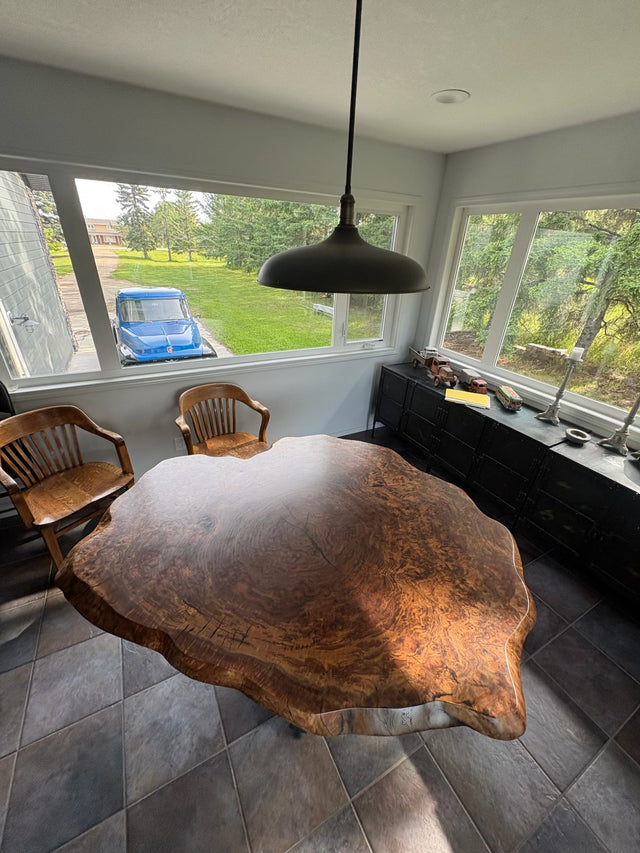
There is something about July that makes people see their home more clearly.
Maybe it is the longer days.
Maybe it is the extra use.
Maybe it is the guests coming through.
Maybe it is the fact that you are finally sitting in the room enough to notice what has been bothering you for months.
But this is usually the point in the year when temporary furniture starts telling on itself.
The table that never really felt solid.
The coffee table that looked fine online but still feels like a placeholder.
The shelves that do the job, but never made the room feel finished.
The piece you bought because it was easy, fast, or “good enough for now.”
July has a way of exposing all of that.
And that is why this is not just a style conversation.
It is an investment conversation.
Summer use reveals the real cost of cheap furniture
Furniture always gets tested eventually.
July just speeds that up.
More meals at the table.
More people in the house.
More time in the living room.
More movement.
More wear.
More moments where the wrong piece becomes impossible to ignore.
That is when cheap furniture starts costing you.
Not because the receipt was high.
Because the piece is already asking for another decision.
Another workaround.
Another excuse.
Another replacement later.
That is the part people miss when they call custom furniture “expensive.”
The real expense often comes from buying furniture that was never built for this kind of life in the first place.
Upfront price is not the same thing as long-term cost
That is the biggest mistake buyers make.
They compare furniture by the first number, not by the full timeline.
And when you only compare the upfront cost, temporary furniture almost always looks like the smarter move.
It feels easier.
It feels safer.
It feels more practical.
Until summer hits and real life starts happening around it.
That is when the equation changes.
Because the cheaper piece starts costing you in other ways:
- it wears faster
- it feels less solid
- it never quite fits the room
- it asks to be replaced sooner
- it keeps reminding you that it was never the piece you really wanted
That is not value.
That is deferred cost.
July is when “good enough for now” starts to feel expensive
A lot of furniture gets bought in a compromise mindset.
Not because people love it.
Because it is available.
Because it is fast.
Because it is cheaper today.
Because it will “do for now.”
But by July, “for now” starts looking exactly like what it is.
Temporary.
And temporary furniture becomes expensive the moment you start planning the next purchase before this one has even earned its place.
That is the trap.
The first purchase feels manageable.
The second purchase is what makes the first one costly.
A real investment should keep making sense as the season goes on
That is what better furniture does.
A well-built solid hardwood piece should not just look good when it arrives.
It should feel more right as you keep living with it.
That is what makes it an investment.
Not the word.
Not the positioning.
The reality.
A good table keeps making sense:
- when people gather around it
- when it gets used every day
- when the room changes around it
- when summer turns into fall
- when trends move on
- when the home keeps evolving
That is the difference between buying for the moment and building for the long run.
Solid hardwood changes the value of the piece over time
This is where the conversation needs to get more honest.
Solid hardwood is not just more beautiful.
It is more dependable.
It gives you:
- better durability
- better weight
- better structure
- better aging
- more repairability
- more staying power
In July, when the home is being used more fully, those things matter even more.
The value of hardwood shows up in the living, not just in the looking.
It feels different because it is different.
And when a piece is built from honest material, with proper joinery and thoughtful construction, the investment keeps proving itself in the months and years ahead.
The most expensive furniture is often the furniture that interrupts your peace
That is another cost people do not talk about enough.
Cheap furniture is not only expensive when it breaks.
It is expensive when it keeps bothering you.
When it feels off in the room.
When it does not feel sturdy.
When it makes the home feel less finished than it should.
When you find yourself already thinking about what you would rather have instead.
That quiet dissatisfaction adds up.
Especially in July, when people want the home to feel easier, warmer, and more welcoming.
A real investment should remove that friction.
It should settle the room down.
It should reduce the compromise.
It should feel worth coming home to.
The smarter July question is not “What can I get quickly?”
It is:
- What piece is this room still missing?
- What am I tired of tolerating?
- What will still feel right after summer?
- What would I rather buy once than keep re-buying?
- What is actually worth investing in if this room matters to me?
Those are better questions.
And they usually lead people away from impulse furniture and toward more lasting decisions.
If the room is getting used more, the furniture should be built for more
That is really the July truth.
A lot of homeowners are not looking for more stuff right now.
They are looking for relief.
They want the room to feel better.
More settled.
More complete.
More grounded.
More ready for real life.
And that usually does not come from one more decor purchase.
It comes from replacing the piece that has been holding the room back.
A better table.
A coffee table with real presence.
Shelving that actually finishes the wall.
A piece built for the home, not just dropped into it.
The best investment is usually the one you stop thinking about replacing
That is what YEG Woodcraft is built around.
Not furniture that just gets you through the season.
Furniture that earns its place well beyond it.
Solid hardwood pieces.
Built at the bench.
Made for real homes.
Made for daily life.
Made to stay.
Because by July, most homeowners already know what is not working.
The better move is not to keep working around it.
It is to build the piece you actually want.