
The Psychology Behind Spaces That Feel Calm vs. Cluttered
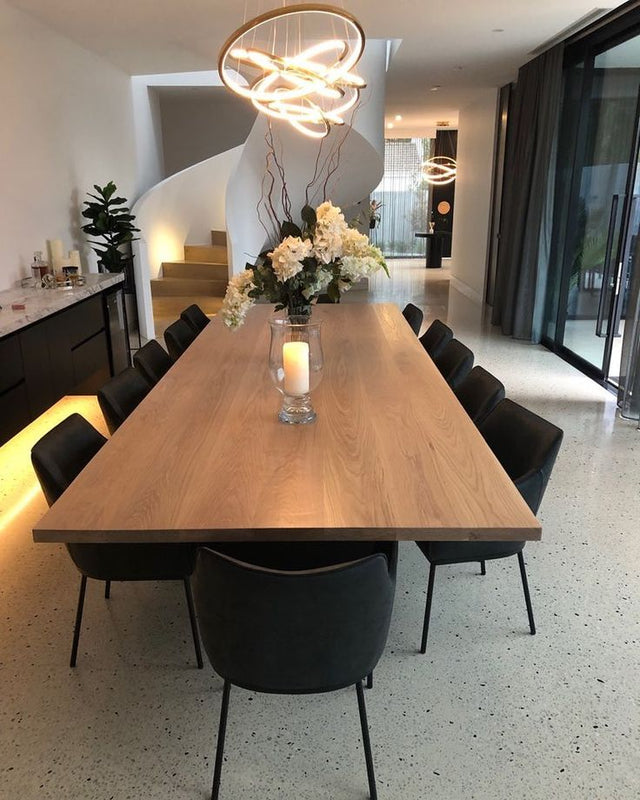
You feel it before you see it.
You walk into a room and something shifts.
Either your shoulders drop…
or they tighten.
That reaction isn’t random.
It’s psychological.
Your Brain Is Always Processing Your Space
Even when you’re not paying attention, your brain is.
It scans:
Visual noise
Movement
Contrast
Spacing
When there’s too much happening, your brain works harder to make sense of it.
That’s what clutter really is.
Not just “too many things”
but too many things competing for attention.
Clutter Creates Mental Friction
A cluttered space doesn’t just look busy.
It feels heavy.
Because your brain is constantly trying to:
Organize what it sees
Filter what matters
Ignore what doesn’t
That constant processing creates subtle stress.
You may not notice it right away.
But you feel it over time.
Calm Spaces Reduce Cognitive Load
A calm space does the opposite.
It removes the need to process everything.
Clear surfaces
Balanced layouts
Fewer, intentional pieces
Your brain doesn’t have to work as hard.
And when your brain relaxes, your body follows.
It’s Not About Minimalism
Calm doesn’t mean empty.
It means intentional.
You can have a full room that still feels grounded.
Because the pieces work together.
There’s structure.
There’s balance.
There’s space between elements.
That space matters.
Furniture Plays a Bigger Role Than You Think
Furniture sets the foundation.
If the main pieces feel off, the entire room feels unsettled.
Too many small pieces create fragmentation.
Oversized pieces disrupt flow.
Mismatched proportions create tension.
But when furniture is well-proportioned and thoughtfully placed, everything else aligns around it.
Visual Weight Changes Everything
Every piece carries visual weight.
Dark tones feel heavier.
Light tones feel softer.
Thick materials feel grounded.
Thin materials feel lighter.
In homes across Edmonton, where seasonal light changes dramatically, this becomes even more noticeable.
The same room can feel completely different depending on how light interacts with your furniture.
Flow Is a Psychological Experience
How you move through a space affects how you feel in it.
Blocked pathways create tension.
Tight layouts create discomfort.
Clear movement creates ease.
Your brain reads flow instantly.
If movement feels natural, the space feels calm.
Why “More” Rarely Feels Better
Adding more pieces doesn’t solve the problem.
It often adds to it.
More décor
More furniture
More visual elements
What creates calm is clarity.
Choosing what stays
Removing what doesn’t
Letting the room breathe
The Subtle Power of Intentional Design
When a space is designed intentionally, something changes.
You don’t just see it.
You feel it.
Your mind settles.
Your body relaxes.
Your home supports you instead of overwhelming you.
Create a Space That Works With Your Mind
If your home feels busy, it’s not just about aesthetics.
It’s about how your brain is responding to it.
Explore how to design a space that feels calm and grounded here:
/calm-home-design-guide